
Reviewed · 3-HOUR EXPERIENCES
Florenz: most important Moments in 3 hours
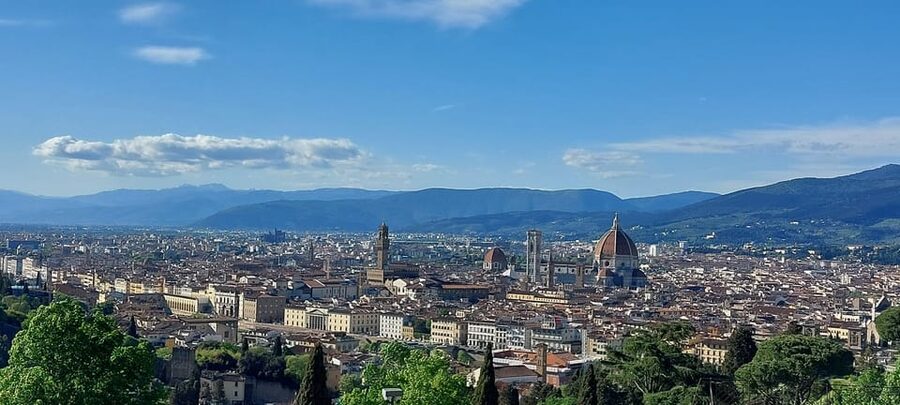
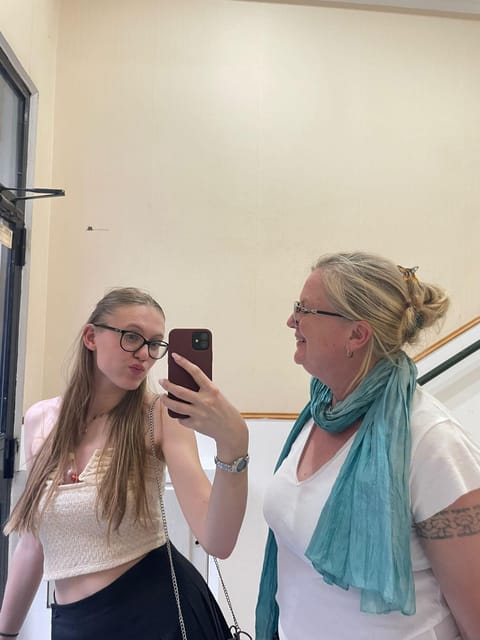
Florence’s Renaissance story comes alive through its churches, palaces, family names, and street corners on this compact walking tour. Starting at Santa Maria Novella, you trace the influence of the Medici, Strozzi, Rucellai, Ginori, Antinori, Vespucci, and Pazzi families before reaching the Cathedral, town hall, and Ponte Vecchio.
I like the clear focus on Florentine power and personalities, rather than a loose list of sights. I also like the modest 2-kilometer route, which gives you a useful first look at the historic center without consuming a whole day. The main caution is the timing: the title says three hours, while the practical details describe a two-hour tour, so check the departure information before booking.
In This Review
- Key points at a glance
- Starting beneath Santa Maria Novella’s loggia
- San Lorenzo and the Medici connection
- Palazzo Medici-Riccardi and banking power
- The Cathedral and Brunelleschi’s famous dome
- Piazza della Signoria, Florence’s public stage
- Ponte Vecchio and the walk back
- What the guide adds
- Is $59 a fair price?
- Who should book this Florence walk?
- Should you book it?
- FAQ
- Where does the Florence walking tour meet?
- Where does the tour finish?
- How long is the tour?
- How far do you walk?
- Is the tour available in English?
- Are entrance tickets included?
- Can children or wheelchair users join?
Key points at a glance
- Santa Maria Novella start: Meet opposite the church, beneath the loggia near the Museo Novecento entrance.
- Renaissance families explained: Connect the Medici, Strozzi, Rucellai, Antinori, Ginori, Vespucci, and Pazzi to the places around you.
- Major Florence sights: See San Lorenzo, the Cathedral and Brunelleschi’s dome, Palazzo Medici-Riccardi, Piazza della Signoria, and Ponte Vecchio.
- A short walking route: Cover about 2 kilometers on foot, with stops for explanation, photographs, and passing views.
- No interior visits: This is an exterior walking tour. You do not enter the churches, palaces, or museums as part of the guided route.
- Small practical requirements: Wear walking shoes, carry water, and prepare for sun or rain.
Starting beneath Santa Maria Novella’s loggia
The meeting point is on the south side of Piazza Santa Maria Novella, opposite the church. Look for the loggia beside the entrance to Museo Novecento. This is a sensible place to begin because Santa Maria Novella gives you both a landmark and a first lesson in Florence’s character.
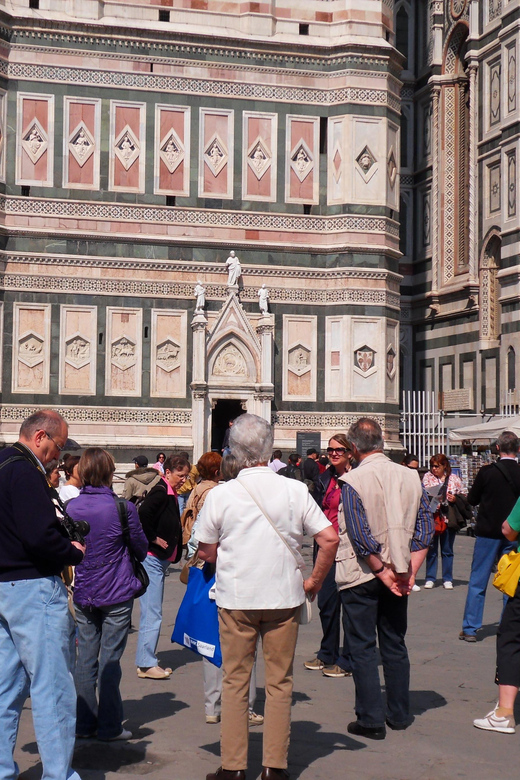
The church facade, designed by Leon Battista Alberti, is one of the city’s great Renaissance fronts. Its orderly geometry and pale marble make a sharp first impression, but the real value of the stop is the story behind it. Your guide uses the church and surrounding square to introduce the city’s powerful families and the way wealth shaped Florence.
You will hear about names that still appear on buildings, streets, businesses, and historic sites. The Rucellai, Ginori, Antinori, Strozzi, Medici, Vespucci, and Pazzi were not simply wealthy households. They were part of the political, commercial, religious, and cultural networks that drove the city.
The tour does not include a guided interior visit to Santa Maria Novella. That matters if you want to see the church’s art and chapels. You can still treat the facade and square as an excellent orientation point, then return later on your own if you want more time inside.
At the end of the walk, you return to this same area. That makes the starting point useful twice: first as the place to meet, and later as a convenient base for visiting the famous Dominican pharmacy independently.
More Florence options worth a look before you decide
- Private Florence Tour: 3-Hour Walking Tour with a Licenced Guide
★ 5.0 · 233 reviews - 3 Hour Florence Pasta Making & Unlimited wine
★ 5.0 · 24 reviews - 3 hour Walking Tour Statue of David and Florence Highlights
★ 5.0 · 23 reviews
San Lorenzo and the Medici connection
From Santa Maria Novella, the route leads toward San Lorenzo. This part of Florence gives the tour its strongest family and power angle. San Lorenzo is closely linked with the Medici and serves as the burial place of the family.
The guide’s job here is not just to point at a church and name it. You learn why this place matters to Florence’s ruling family and how burial sites, churches, and public buildings helped display status. The city’s famous families left their mark in very practical ways, and San Lorenzo is one of the clearest examples.
The area is also known for its leather craft market. That adds a present-day commercial note to the historic setting. You are not looking only at old stone. You are also seeing how shopping and trade remain part of the district’s identity.
Expect time for explanation and exterior views rather than a market shopping session or a church interior visit. The leather market can be useful after the tour if you want to browse, but the supplied details do not promise tastings, shopping assistance, or purchases as part of the experience.
Palazzo Medici-Riccardi and banking power
Palazzo Medici-Riccardi helps explain how money turned into influence. The building is tied to the Medici and to Florence’s banking story, making it a useful stop for understanding the practical force behind the city’s artistic and political achievements.
I like this part of the route because it moves beyond the usual admiration of facades. Florence did not become a major Renaissance center through art alone. Banking, trade, family alliances, and political control all played a part, and the palazzo gives your guide a natural place to connect those ideas.
You will view the building from outside. Since there is no interior touring, you should not expect access to its rooms, courtyards, or collections through this booking. The value here is the explanation of the building’s role within the city, paired with the surrounding streets where Florence’s elite conducted business and displayed their position.
This is also where the family names begin to feel less like a memorization exercise. As you move from one site to the next, the Rucellai, Strozzi, Medici, and other households become part of a connected city story.
The Cathedral and Brunelleschi’s famous dome
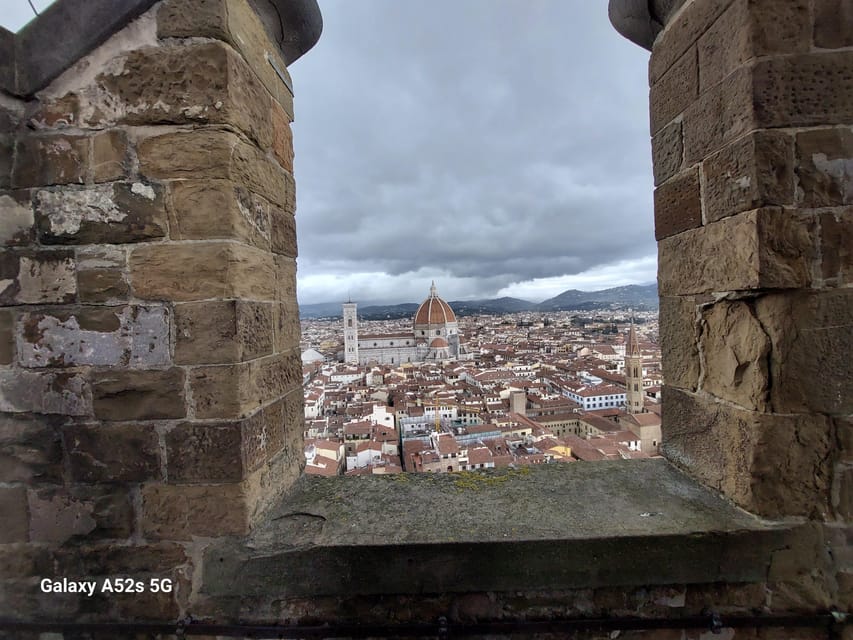
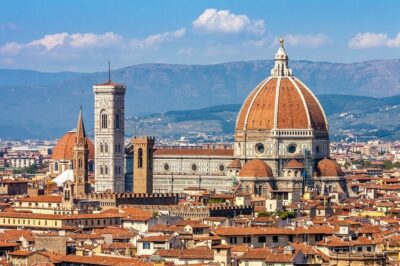
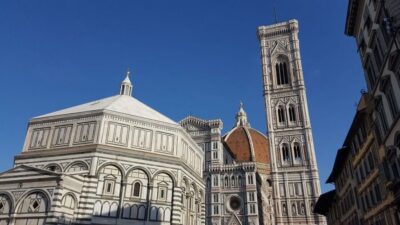
Florence’s Cathedral is the visual centerpiece of the route. The dome by Filippo Brunelleschi is one of the city’s defining sights, and even an exterior stop gives you a strong sense of its scale and engineering challenge.
Your guide explains the Cathedral within the larger story of Florence. The important point is not only that the dome is beautiful. It also represents technical ambition, civic pride, competition, and the wealth needed to support major building projects.
You will have a chance to see the Cathedral and take photographs, but this is not a dome climb or a ticketed church visit. No entrance tickets are included, and the tour does not conduct interior visits. If climbing the dome or seeing the Cathedral’s interior is high on your list, plan that separately and allow extra time in Florence.
The stop works best when you listen to the explanation before taking photographs. Florence can feel crowded around the Cathedral, and a guide helps turn a busy square into a readable part of the city rather than just another photo stop.
A different way to spend the same Florence day:
- Florence: Skip-The-Line Uffizi Gallery Timed Entry Ticket
★ 4.5 · 27,832 reviews - Tuscany Day Trip from Florence: Siena, San Gimignano, Pisa and Lunch at a Winery
★ 5.0 · 21,634 reviews - Florence: Timed Entrance Ticket to Michelangelo’s David
★ 4.6 · 16,983 reviews - Florence: Michelangelo’s David Skip-the-Line Entry Ticket
★ 4.5 · 12,764 reviews
Piazza della Signoria, Florence’s public stage
The route continues to Piazza della Signoria, the city’s great civic square. Here the focus shifts from private family power to public authority. The town hall and surrounding palaces show how Florence presented government, law, and political strength in the heart of the city.
This is a useful contrast with the Medici sites. At San Lorenzo and Palazzo Medici-Riccardi, you consider family influence and banking. In Piazza della Signoria, you look at the public face of the city and the place where civic power was displayed.
The tour provides a guided exterior visit and a chance to stop for photographs. It does not include museum entry or access to the town hall. If you want to see the collections around the square, tickets and additional time are your responsibility.
I would pay close attention here if you enjoy political history. The names of Florence’s families make more sense once you see how private wealth and public space were connected. The guide’s account of the city’s patricians is likely to be most useful at this point in the walk.
Ponte Vecchio and the walk back
The final major sight is Ponte Vecchio, the old bridge across the Arno. It gives the tour a strong closing image and a chance to see Florence from a different kind of public space.
The bridge is not presented as an isolated attraction. It forms part of the route’s wider story about commerce, power, and the old city. By this point, you have seen religious buildings, family palaces, civic spaces, and commercial areas. Ponte Vecchio helps tie those parts together.
The route then returns to Piazza Santa Maria Novella. This loop is convenient because you finish where you started, with no need to arrange transport back to your hotel or another part of town. The total walking distance is about 2 kilometers, but the sightseeing pace includes standing, listening, and stopping for photographs.
That distance is manageable for a reasonably fit person, but it is not a seated sightseeing ride. Wear comfortable shoes, bring water, and prepare for sun or rain. A hat, umbrella, and weatherproof clothing are specifically useful choices.
What the guide adds
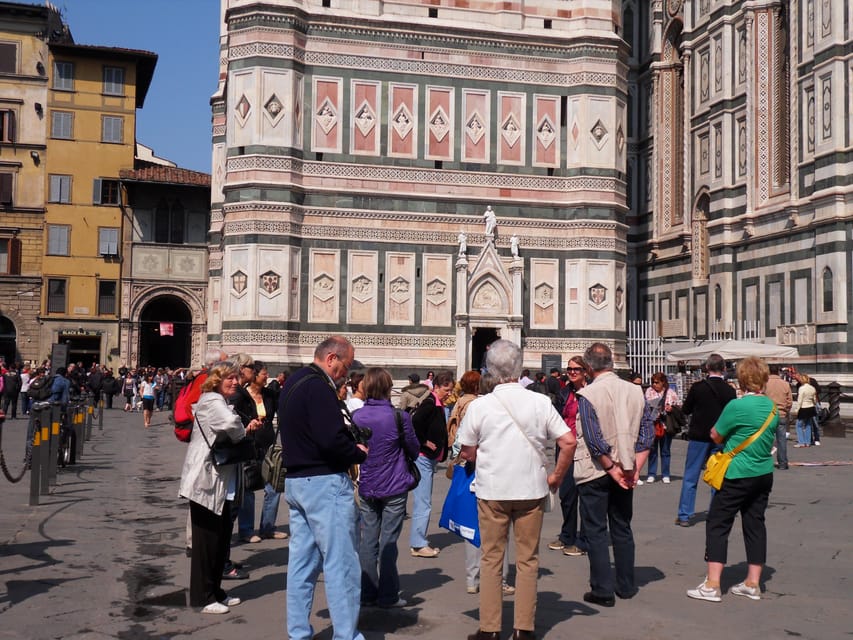
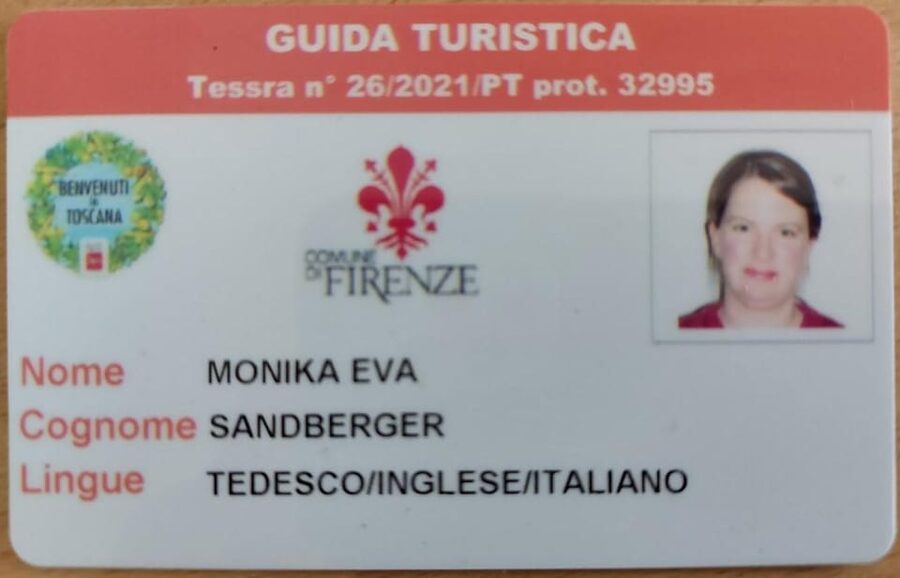
The tour is available in English, German, and Italian with a live guide. Some of the most positive feedback specifically names Monika, whose explanations were described as informative, entertaining, and easy to understand. Monika is not guaranteed for every departure, so treat her as a possible guide rather than a promise.
The strongest feature of the guiding style appears to be clear delivery. That matters in Florence, where the sights can compete for your attention and the family names can become confusing. A guide who links a church, palace, grave, shop, or street name to a larger story gives you a better way to remember what you see.
This is not a specialist art-history lecture based on the information provided. It is a city introduction centered on Florence’s history and important monuments. You should expect a broad, approachable explanation rather than long discussions of individual paintings or detailed architectural analysis.
The tour also avoids overloading you with tickets and interiors. That keeps the route simple and lets you decide later which museums or churches deserve your time. The tradeoff is that you need to plan those visits yourself.
Is $59 a fair price?
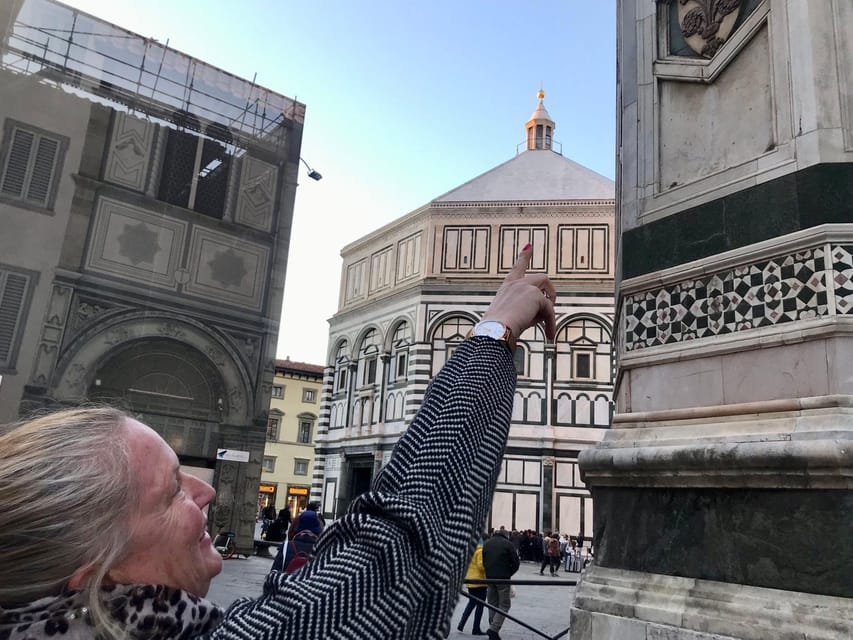
At $59 per person, this tour makes the most sense as a guided orientation to central Florence. You are paying for a live guide, a planned route, and a connected explanation of major landmarks and families. There are no food tastings, catering, entrance tickets, or interior tours included.
The value depends on how much help you want with context. If you already know Florence well and mainly want to walk between famous sights, the price may feel high for a two-hour exterior route. If the Medici, Renaissance politics, and the city’s old families are new to you, the explanations can make the same streets far more meaningful.
The duration needs special attention. The experience title refers to three hours, the included section says three hours, and the practical details state two hours. The itinerary also lists Florence as a two-hour guided visit. I would check the exact departure duration when selecting a date, especially if you have a museum reservation or train to catch.
Free cancellation up to 24 hours before the start and the option to reserve now and pay later reduce the risk of fitting it into a changing schedule. Those policies are useful, but they do not change the basic value question: this is an exterior history walk, not a ticket package.
Who should book this Florence walk?
I would recommend it to a first-time visitor who wants a clear introduction before exploring Florence alone. It is also a good fit if you enjoy hearing the story of a city through its families, buildings, and public spaces rather than visiting one museum for several hours.
The route suits people with a reasonable level of fitness who can walk about 2 kilometers and remain on their feet during explanations. Children under seven are not suitable for this activity, and unaccompanied minors are not allowed. It is not suitable for wheelchair users, people with low fitness, visually impaired people, or hearing-impaired people according to the stated conditions.
Take comfortable shoes, water, sun protection, an umbrella, and clothes that suit the forecast. The listed requirements also include a passport-sized photo and a passport or identity card, with a copy accepted. Pets, walking frames, costumes, and bare feet are not allowed.
Should you book it?
Book this tour if you want a short, story-led introduction to Florence and are happy to see the main sights from outside. The route covers an impressive set of landmarks, and the focus on the Medici and other patrician families gives the walk a useful thread.
Skip it if you need interior access, a dome climb, food, or a longer specialist tour. Also confirm the actual duration before paying, since the supplied information gives both two and three hours.
For many first visits, this works best near the start of your stay. Afterward, you can return to Santa Maria Novella, the Cathedral, San Lorenzo, or the museums around Piazza della Signoria with a better sense of what you are looking at.
FAQ
Where does the Florence walking tour meet?
You meet on the south side of Piazza Santa Maria Novella, opposite the church, under the loggia near the entrance to Museo Novecento.
Where does the tour finish?
The walk returns to P.za di Santa Maria Novella, 29r, the same general area as the starting point.
How long is the tour?
The practical activity details list a duration of two hours, while other information refers to three hours. Check the available start and duration details when booking.
How far do you walk?
You cover about 2 kilometers on foot. The route includes walking between sights, standing for explanations, and stops for photographs.
Is the tour available in English?
Yes. Live guiding is available in English, German, and Italian.
Are entrance tickets included?
No. Tickets, tastings, and catering are not included. The city tour does not conduct interior visits.
Can children or wheelchair users join?
Children under seven are not suitable, and unaccompanied minors are not allowed. The activity is also not suitable for wheelchair users, people with low fitness, visually impaired people, or hearing-impaired people.
Latest additions around Florence
- Florence: Cathedral Tour & Brunelleschi’s Dome Climb Ticket★ 5.0 · 3 reviews
- Palatina Gallery and Pitti Guided Tour in Florence★ 5.0 · 3 reviews
- Florence Uffizi Gallery Skip-the-line Tour w Art Historian Guide★ 5.0 · 3 reviews
- Private Tour: Pisa and Lucca from Florence★ 5.0 · 3 reviews
- San Gimignano Bike Tour (SOFT)★ 4.5 · 3 reviews
- Florence: Tour of Florence by rickshaw★ 5.0 · 3 reviews
- Center of Florence by golf cart★ 5.0 · 3 reviews
- From Florence: Tour to Siena and San Gimignano by Minivan★ 4.5 · 3 reviews
3-Hour Experiences, compared.
Private Florence Tour: 3-Hour Walking Tour with a Licenced Guide
Read our review →
3 hour Walking Tour Statue of David and Florence Highlights
Read our review →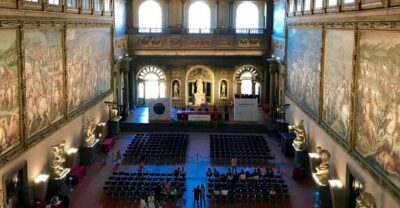
Medieval & Renaissance Private 3-Hour Walking Tour
Read our review →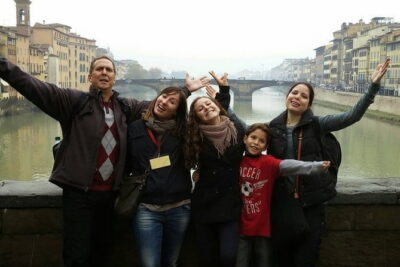
3 hours: Private walking tour of Florence and Accademia Gallery guided visit
Read our review →
3 Hour Horse Ride to a Castle for Wine Tasting and snack Lunch
Read our review →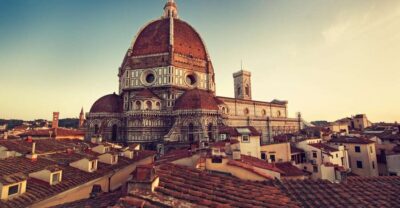
Private 3-Hour Guided Tour & Uffizi Gallery Visit
Read our review →Browse the lists this tour appears in