Reviewed · WINE TOURS
Florence Wine Tasting Experience with Seven Types of Tuscan Wine
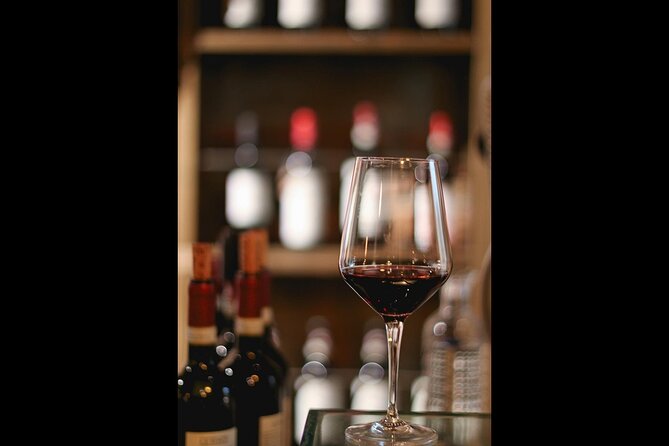
Seven Tuscan wines, a generous platter of local food, and a sommelier who explains what is in your glass make this a useful introduction to Tuscany’s wine world. The tasting takes place at Vino Tasting Global, a charming medieval venue on Via del Gomitolo dell’Oro in central Florence.
I like the broad range of wines, from crisp Vernaccia di San Gimignano to Brunello di Montalcino and Supertuscan Miraia. I also like the practical food pairing, since cheese, salami, bruschetta, olives, and prosciutto help you understand wine through taste rather than jargon.
The main consideration is the pace. Ninety minutes is enough for a focused tasting, but seven wines can feel brisk if you want long conversations about every bottle. Arrive early, too. Late arrivals cannot join or receive a refund.
In This Review
- Key Points at a Glance
- Why Seven Tuscan Wines Make a Useful Lesson
- What the Sommelier Actually Adds
- The Medieval Venue in Central Florence
- The Food Board Is Part of the Lesson
- Comparing the Main Wine Styles
- Is $70.70 a Fair Price?
- Who Will Get the Most From This Tasting?
- Practical Details Before You Book
- Final Verdict: Should You Book It?
- FAQ
- Where does the Florence wine tasting begin and end?
- How long does the wine tasting last?
- How many Tuscan wines are included?
- What food is served with the wine?
- Are vegetarian or gluten-free options available?
- Can children attend?
- What happens if I arrive late or need to cancel?
Key Points at a Glance
- Seven distinct Tuscan wines: Taste Vernaccia, Bolgheri Rosso, Chianti Classico, Nobile di Montepulciano, Brunello di Montalcino, and Miraia.
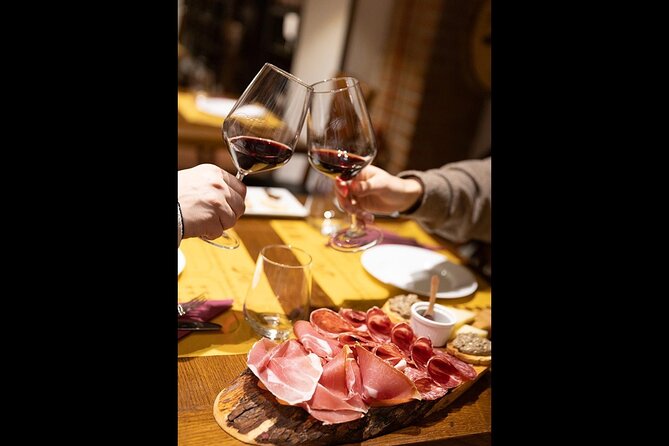
- A food pairing that feels substantial: The platter includes Tuscan cheeses, salami, bruschetta, olives, and prosciutto.
- Sommelier-led instruction: Guides such as Giorgio, Vinci, Francesca, Lorenzo, Jessica, and Hesu have helped explain tasting technique and regional styles.
- Central Florence setting: The experience begins and ends at Vino Tasting Global, with no hotel transportation included.
- Adaptable for different tastes: Guides can adjust wine and food choices around preferences, vegetarian needs, and gluten-free requests.
- Good value for serious tasters: At $70.70 per person, the price includes seven wines, instruction, and a food platter.
Why Seven Tuscan Wines Make a Useful Lesson
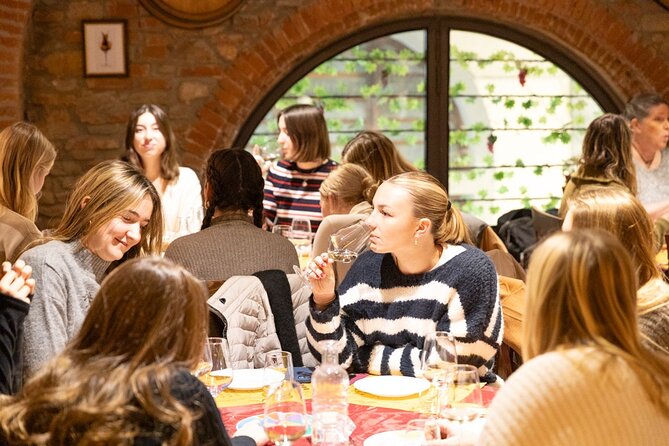
The strength of this tasting is its range. Instead of trying several similar Chiantis, you move across different grapes, appellations, and styles from Tuscany.
You begin with Vernaccia di San Gimignano, a white wine known for its freshness. That gives your palate a lighter starting point before the tasting moves into red wines. Bolgheri Rosso then brings a different Tuscan identity, connected with the coastal Bolgheri area and its polished red wine style.
Chianti Classico Base offers a chance to meet one of Tuscany’s best-known wines in a straightforward form. Later, Chianti Classico Riserva lets you compare a more developed expression from the same broad tradition. That side-by-side idea is especially useful if you have seen Chianti on restaurant lists but never understood the difference between basic and reserve bottlings.
The tasting also includes Nobile di Montepulciano Base, Brunello di Montalcino, and Miraia. Brunello is the prestige name in the group, while Miraia represents the category of Supertuscans, wines that often use a less traditional blend or approach than classic Tuscan denominations.
You do not need prior wine experience. The point is not to memorize labels. It is to notice how acidity, body, tannin, oak, fruit, and food change your impression of each glass.
More Florence wine afternoons:
- Tuscany Day Trip from Florence: Siena, San Gimignano, Pisa and Lunch at a Winery
★ 5.0 · 21,634 reviews - Florence: Pasta Cooking Class with Unlimited Wine
★ 4.9 · 10,285 reviews - Florence: Chianti Wineries Tour with Wine Tasting
★ 4.5 · 8,301 reviews
What the Sommelier Actually Adds
A bottle lineup alone would not justify this price. The value comes from having someone guide you through it.
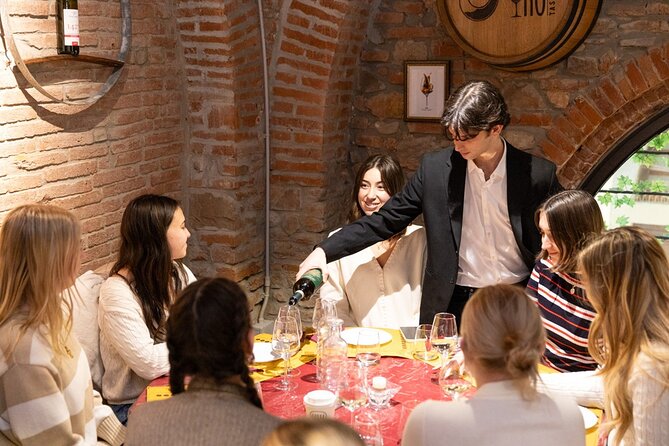
The sommelier explains basic tasting technique and the background of each wine. That can include how to look at the wine, smell it, taste it, and describe what you notice. The best part is the translation into ordinary language. Several guides are praised for explaining complex wine in terms that make sense without making beginners feel out of place.
Giorgio has been especially effective with small, basic wine questions. Vinci and Hesu have guided groups through regional wines and pairings with a warm, attentive approach. Francesca, Lorenzo, and Jessica are also named as hosts who bring patience and enthusiasm to the table.
The guide may ask what you already like and then adjust later pours or pairings to suit you. That matters. A person who prefers lighter wines may need a different path through the tasting than someone who orders full-bodied reds. The experience is not simply a fixed lecture, even though the seven-wine structure remains the same.
I also appreciate the balance between explanation and quiet tasting time. You get stories about the wine and its place, but you are not expected to listen nonstop while your glass sits untouched.
The Medieval Venue in Central Florence
The meeting point is Vino Tasting Global, Vino Tasting Global Srl, at Via del Gomitolo dell’Oro, 11r, 50123 Florence. The activity ends at the same address.
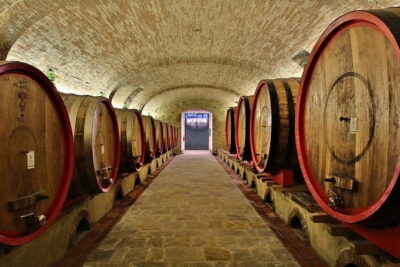
The venue is described as beautiful, clean, inviting, and full of medieval character. That setting gives the tasting more sense of place than a generic hotel conference room. You are still in the center of Florence, but the experience turns your attention toward wine, food, and conversation.
No hotel pickup or drop-off is included. Plan to reach the address on your own and allow extra time to find the entrance. The strict late-arrival rule makes this important. If you arrive after the start time, you cannot join, and the booking will not be refunded or moved to another time.
The maximum group size is 70 people. That is a fairly large possible capacity, so the mood may depend on the day and the number booked. Some groups have described the experience as private and welcoming, but you should not assume every session will be a small, intimate tasting.
The Food Board Is Part of the Lesson
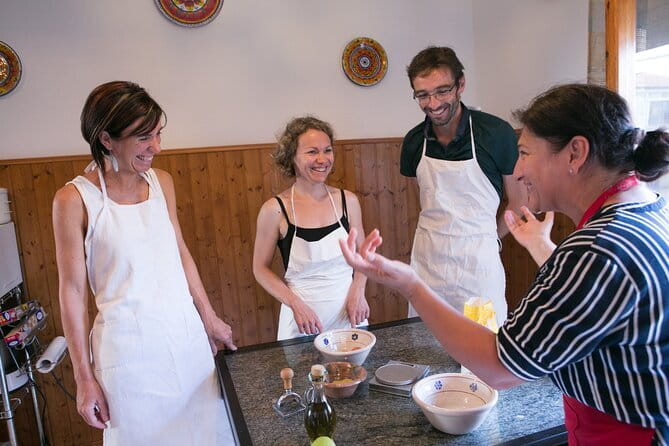
The food is not just a token snack. The included platter contains Tuscan cheeses, salami, bruschetta, Italian olives, and prosciutto. Additional food mentioned in the tasting experience includes bread, local olive oil, and pickled vegetables.
This spread helps you understand why pairing matters. A salty cured meat can make a wine seem softer. Cheese can change the way you notice tannin and acidity. Bruschetta and olive oil give you a fresh, savory contrast to richer reds.
Portions have been described as generous, with enough food that some people were barely hungry for dinner afterward. That makes the $70.70 cost easier to justify, especially if you treat the tasting as a light meal rather than a pre-dinner sample.
The food is also adjusted when requested. Vegetarian and gluten-free menus are available, but you need to ask when booking. Tell the staff about allergies or intolerances at booking and again before the tasting. Do not wait until the platter is already on the table.
A different way to spend the same Florence day:
- Florence: Skip-The-Line Uffizi Gallery Timed Entry Ticket
★ 4.5 · 27,832 reviews - Florence: Timed Entrance Ticket to Michelangelo’s David
★ 4.6 · 16,983 reviews - Florence: Michelangelo’s David Skip-the-Line Entry Ticket
★ 4.5 · 12,764 reviews - The Best tour in Florence: Renaissance & Medici Tales – guided by a STORYTELLER
★ 5.0 · 12,316 reviews
Comparing the Main Wine Styles
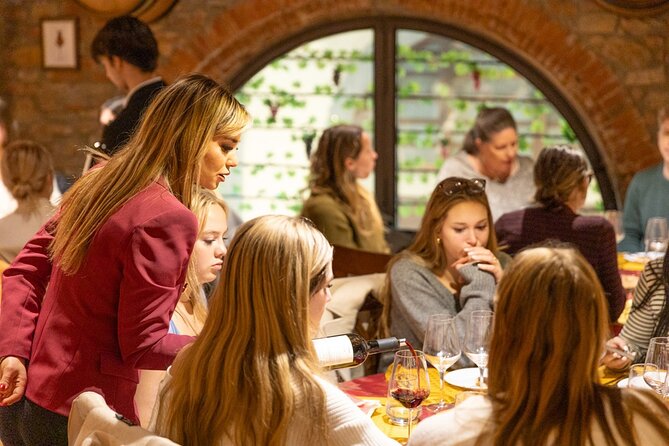
The order of the wines may vary, but the selection gives you several useful comparisons.
Vernaccia di San Gimignano: This is the white wine in the lineup. It offers a lighter, brighter opening and shows that Tuscany is not only a red wine region.
Bolgheri Rosso: Bolgheri wines bring a coastal Tuscan identity and usually offer a more polished, modern red wine style. It makes a good contrast with the more traditional names that follow.
Chianti Classico Base: This is an approachable way to meet the famous Chianti Classico category. The sommelier can explain the regional rules and style without expecting you to already know the difference between Chianti and Chianti Classico.
Nobile di Montepulciano Base: This adds another important Tuscan appellation. Comparing it with Chianti Classico helps you notice that neighboring areas can produce wines with different balance and character.
Chianti Classico Riserva: The reserve bottling gives you a direct comparison with the base Chianti Classico. Ask the guide to point out what has changed in aroma, body, tannin, or finish.
Brunello di Montalcino: This is the heavyweight name of the tasting. It is a chance to try one of Tuscany’s most respected wines without committing to a full bottle in a restaurant.
Miraia, a Supertuscan: This rounds out the lesson with a wine that does not fit the classic mold as neatly. It shows how Tuscan producers can work outside traditional categories while still making wines strongly associated with the region.
Do not worry if you cannot identify every aroma. The guide’s job is to help you notice differences, not test you.
Is $70.70 a Fair Price?
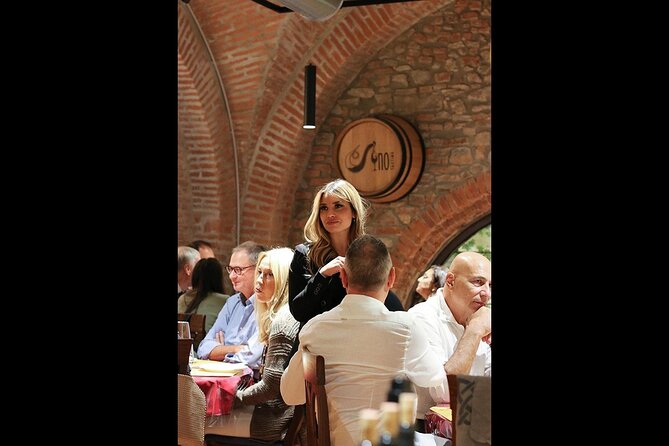
At $70.70 per person, this is not a bargain aperitivo. It is also more than a simple glass of wine with a plate of snacks. The price includes seven types of Tuscan wine, a sommelier-led tasting class, an official certified guide, and the appetizer platter.
The value is strongest if you want education along with drinking. Seven restaurant pours bought separately could cost a great deal more, particularly when Brunello and other premium wines are involved. The included food also has real substance.
A large group could make the price feel less compelling if you prefer a quiet, personal tasting. On the other hand, the guides have adjusted choices for individual preferences and have offered attentive service even when working with groups.
Some people have purchased bottles to take home after the tasting. That is optional and not part of the listed price. You should treat any bottle purchase or shipping arrangement as a separate decision.
The experience is also relatively short at about one hour and 30 minutes. That makes it easy to fit around museum visits, but it limits the amount of time available for each wine. If you want a full winery visit, vineyard walk, or cellar tour outside Florence, this is not that kind of activity.
Who Will Get the Most From This Tasting?
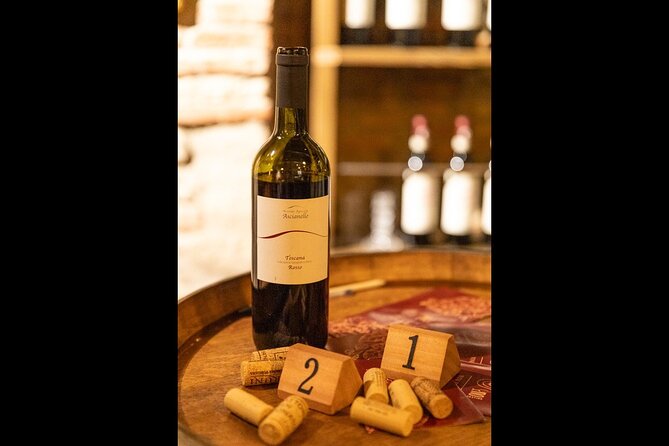
This is a good match for several types of visitors:
- First-time wine tasters: The guide explains basic tasting methods and avoids assuming too much.
- Food-focused visitors: The platter is large enough to matter, and the pairings help connect wine with Tuscan eating.
- Couples and friends: The format gives you something to discuss and compare without requiring a full evening.
- Experienced wine drinkers: The lineup includes serious bottles such as Brunello and a Supertuscan, not only entry-level wines.
- Families with older teenagers: Nonalcoholic drinks such as Coca-Cola, Fanta, or Sprite are available for children, though alcoholic beverages are only available to participants aged 17 and above.
- Vegetarian or gluten-free diners: Requests can be accommodated if made ahead of time.
It may not suit you if you dislike structured tastings, want a vineyard setting, or plan to drink heavily. The emphasis is on learning, comparison, and food pairing rather than simply ordering drinks.
Practical Details Before You Book
You receive confirmation at booking, and the activity is offered in English. A mobile ticket is accepted, but you must carry a valid identification document.
The tour requires a minimum number of people to operate. The stated maximum is 70 participants, so ask about the expected group size if that will affect your decision.
The experience is often booked about 27 days ahead. That suggests you should reserve early if your Florence dates are fixed, especially during busy travel periods.
Free cancellation is available up to 24 hours before the local start time. If you cancel or request changes inside that window, you will not receive a refund, and late arrival is treated just as strictly.
Remember that the activity starts and ends at the same central Florence address. There is no transport from your hotel, and no extra meals or beverages beyond the stated inclusions.
Final Verdict: Should You Book It?
I would book this if you want a well-organized introduction to Tuscan wine without leaving Florence. The seven-wine spread gives you more range than a basic tasting, and the food board turns it into a satisfying mid-day or early-evening activity.
The strongest reason to choose it is the staff’s ability to explain wine in plain terms and adjust the tasting to your preferences. Giorgio, Vinci, Hesu, Francesca, Lorenzo, and Jessica are all praised for making newcomers comfortable while still offering useful detail to people who already know a little.
I would skip it only if you want a countryside winery visit, a very small group, or a leisurely tasting lasting several hours. For a 90-minute city-center experience with substantial food and premium Tuscan styles, the $70.70 price is reasonable. Arrive early, disclose dietary needs, bring identification, and let the sommelier guide you beyond the familiar Chianti label.
FAQ
Where does the Florence wine tasting begin and end?
It begins at Vino Tasting Global Srl, Via del Gomitolo dell’Oro, 11r, 50123 Florence, Italy. The activity ends back at the same meeting point.
How long does the wine tasting last?
The experience lasts approximately one hour and 30 minutes.
How many Tuscan wines are included?
Seven types of Tuscan wine are included: Vernaccia, Bolgheri Rosso, Chianti Classico Base, Nobile di Montepulciano Base, Chianti Classico Riserva, Brunello di Montalcino, and Miraia.
What food is served with the wine?
You receive a platter of Tuscan appetizers with local cheeses, salami, bruschetta, Italian olives, and prosciutto. Bread, olive oil, and pickled vegetables may also be included in the pairings.
Are vegetarian or gluten-free options available?
Yes. Vegetarian and gluten-free menus are available on request. Report allergies or intolerances when booking and again before the tasting.
Can children attend?
Children can receive Coca-Cola, Fanta, or Sprite. Alcoholic beverages are available only to participants aged 17 and above, and everyone should carry a valid identification document.
What happens if I arrive late or need to cancel?
You cannot join the activity if you arrive after the start time, and you will not receive a refund or rescheduling. You can cancel for a full refund up to 24 hours before the experience begins.
Latest additions around Florence
- Florence: Cathedral Tour & Brunelleschi’s Dome Climb Ticket★ 5.0 · 3 reviews
- Palatina Gallery and Pitti Guided Tour in Florence★ 5.0 · 3 reviews
- Florence Uffizi Gallery Skip-the-line Tour w Art Historian Guide★ 5.0 · 3 reviews
- Private Tour: Pisa and Lucca from Florence★ 5.0 · 3 reviews
- San Gimignano Bike Tour (SOFT)★ 4.5 · 3 reviews
- Florence: Tour of Florence by rickshaw★ 5.0 · 3 reviews
- Center of Florence by golf cart★ 5.0 · 3 reviews
- From Firenze | Chianti day tour in a classic car★ 5.0 · 3 reviews
Wine Tours, compared.
Tuscany Day Trip from Florence: Siena, San Gimignano, Pisa and Lunch at a Winery
Read our review →
Small-Group Wine Tasting Experience in the Tuscan Countryside
Read our review →
Pasta & Tiramisu Cooking Class with Unlimited Wine
Read our review →
Pisa, Siena and San Gimignano Day Trip with Lunch & Wine Pairing
Read our review →