
Reviewed · WINE TOURS
Florence Food & Wine Tour: Tuscan Tastings with Local Guide
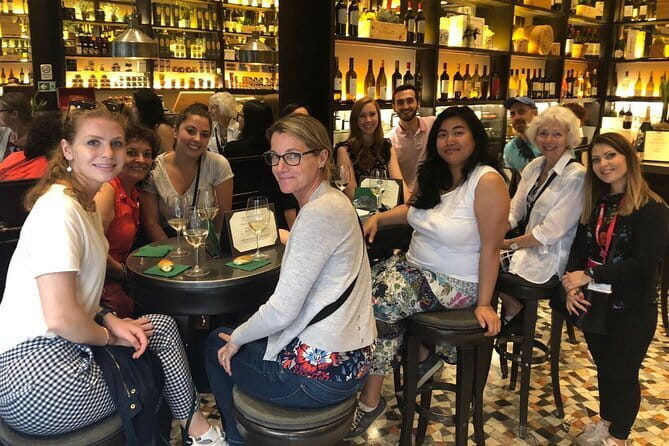
Florence’s best food lesson may be the simplest one: follow a local guide from shop to shop and eat what Tuscans have long eaten at home. This five-stop walking tour pairs salumi, pecorino, old-fashioned soups, lampredotto, gelato, and almond cookies with five wine tastings, including Chianti and Vin Santo.
I like the way the route mixes working food shops with famous Florence sights, including the Porcellino, Piazza della Signoria, and the Duomo. I also like the relaxed late-afternoon timing, which lets you turn the tasting into dinner and collect useful restaurant tips from guides such as Mara, Chiara, and Vincenzo. The one drawback is that the savory food leans heavily toward meat, cheese, and bread, so it may feel less varied if you want a broad vegetable-focused meal.
- Five tastings make a full meal: Plan to arrive hungry, since the portions together are intended to replace dinner.
- Tuscan food comes first: You’ll taste salumi from a free-range organic farm, local pecorino, olive oil, bread, and traditional cucina povera.
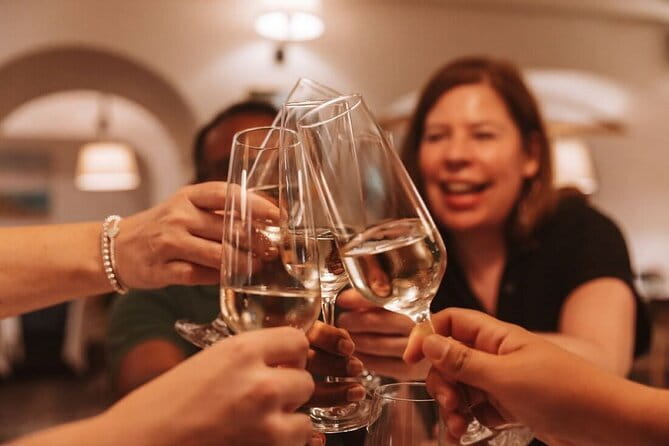
- Five wine servings are included: Expect several regional wines, including Chianti, followed by sweet Vin Santo with cantucci.
- Only about 1.6 kilometers of walking: The route is easy to manage, with food stops breaking up the stroll.
- Small groups keep it personal: The maximum group size is 12, and a private option is available.
- The start works well for a first evening: Meet at 4:30 p.m. in Piazza della Repubblica and finish at Piazza Strozzi.
In This Review
- What this Florence food tour is really about
- Piazza della Repubblica to the Porcellino
- The first plate: salumi, pecorino, and olive oil
- Piazza della Signoria and the cooking of ordinary homes
- The Duomo walk and Florence’s wine windows
- Gelato, the sweet break every Florence walk needs
- Cantucci and Vin Santo at the finish
- Piazza Strozzi and the value of the 4:30 start
- Is $92.54 a fair price?
- Who should book this experience?
- Should you book the Florence food and wine tour?
- FAQ
- How long does the Florence food and wine tour last?
- Where does the tour start?
- What time does the tour begin?
- Where does the tour finish?
- How much walking is involved?
- How many people can join the group?
- What food is included?
- How many wine tastings are included?
- Is there a minimum age?
- Can people with dietary restrictions join?
- Is hotel pickup included?
- Can I cancel for a full refund?
What this Florence food tour is really about
This is not a museum tour with a few token bites. It is a short, food-centered walk through central Florence, built around the idea that Tuscan cooking values good raw materials over showy technique.
Your guide explains how local food traditions developed around practical home cooking. That means sturdy bread, beans, vegetables, cured meat, cheese, and dishes made to use what was available. The food may sound humble, but that is the point. You get a useful introduction to cucina povera, the traditional cooking of ordinary households, rather than a polished restaurant menu designed for tourists.
The route takes about two and a half hours. You walk roughly one mile through the center, stopping often. I would call it an easy city walk, but Florence has stone paving and busy pedestrian streets, so wear shoes that can handle both.
The meeting point is Piazza della Repubblica at 4:30 p.m. That timing is smart. The afternoon heat may have eased, and the tastings carry you toward the early evening. Since the tour finishes in Piazza Strozzi, you remain in a central area with plenty of choices for a later drink or dinner.
Piazza della Repubblica to the Porcellino
Piazza della Repubblica is a practical place to begin. It is broad, central, and easy to find, with Florence’s older street pattern meeting a more formal city square. Your guide gathers the group here and sets the tone with an explanation of Tuscany’s food culture.
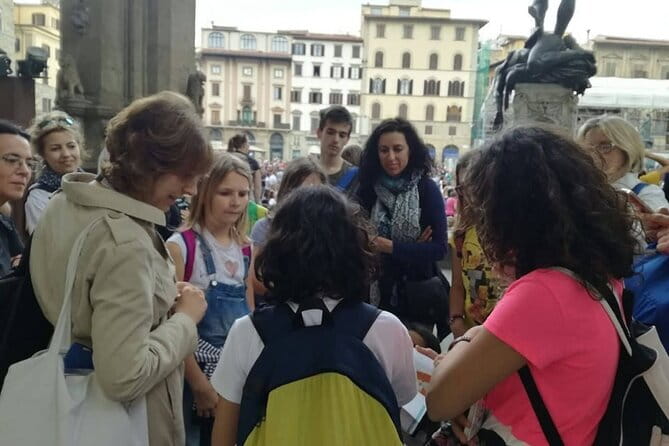
From there, you walk toward the bronze Porcellino statue. Rubbing the boar’s nose is a familiar Florence ritual, and you can make your wish before the serious eating begins. This is a quick stop, not a long sightseeing talk, but it gives the walk a bit of local character.
I appreciate this opening because you begin with the city itself rather than being rushed straight into a restaurant. You get your bearings, meet the group, and hear how the route will work. If you want a full lesson on the monuments, though, this is not the right tour. The sights provide context between food stops, while the tastings remain the main event.
More Florence food crawls:
- Florence Pizza or Pasta Class with Gelato Making at a Tuscan Farm
★ 5.0 · 6,801 reviews - Winner 2025 Florence Sunset Food & Wine Tour by Eating Europe
★ 5.0 · 5,015 reviews - Cooking Class and Lunch at a Tuscan Farmhouse with Local Market Tour from Florence
★ 5.0 · 4,831 reviews
The first plate: salumi, pecorino, and olive oil
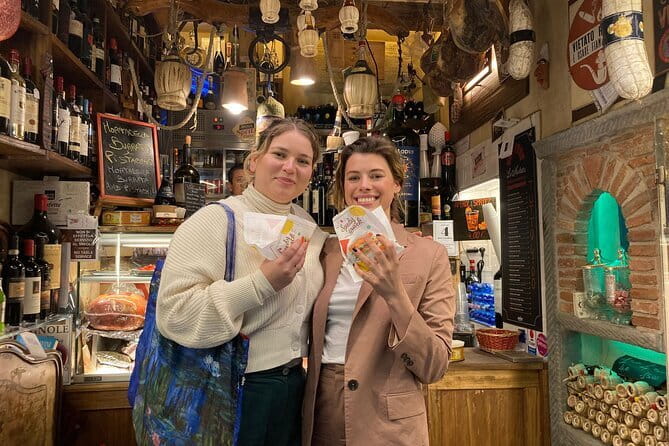
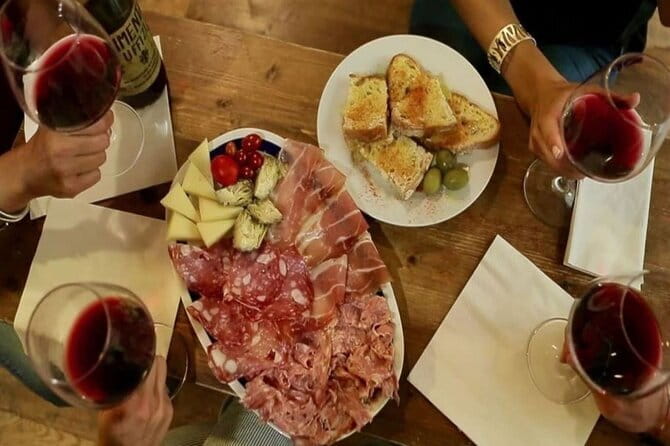
Near the historic Torre dei Belfredelli area, you stop at a delicatessen for the first substantial tasting. The platter includes Tuscan prosciutto and other salumi, sun-dried tomatoes, local cheese, and fresh bread drizzled with extra virgin olive oil.
The meat is tied to the owner’s free-range organic farm, which gives the tasting a more direct connection to Tuscan food production. You are not just sampling anonymous cold cuts. Your guide can explain what you are eating and how it fits into the region’s food habits.
The pecorino adds a firm, savory contrast to the cured meat. The bread and olive oil may sound basic, but this is where quality matters. Tuscan bread is traditionally made without salt, so olive oil and a little seasoning become especially important at the table.
A glass of local wine accompanies the plate. It is a good first course because it introduces the central formula of the tour: simple ingredients, careful sourcing, and wine that belongs with the food rather than being treated as a separate performance.
This stop will suit you if you enjoy grazing on meat and cheese. It may be less satisfying if you are hoping for a large range of cooked vegetables or seafood. Vegetarians can take part, and lactose-free or gluten-free, non-celiac, guests can be accommodated, but choices may be limited at individual shops. Tell the guide about your needs at the start.
Piazza della Signoria and the cooking of ordinary homes
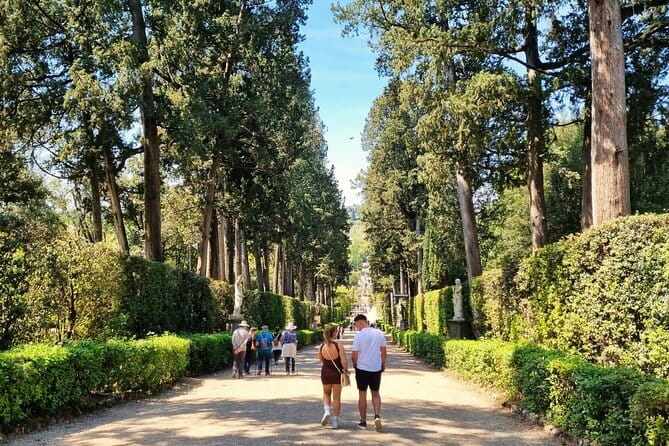
The walk continues through Piazza della Signoria, one of Florence’s grand public spaces. You pass statues and historic buildings on the way to a smaller place focused on traditional Tuscan home cooking.
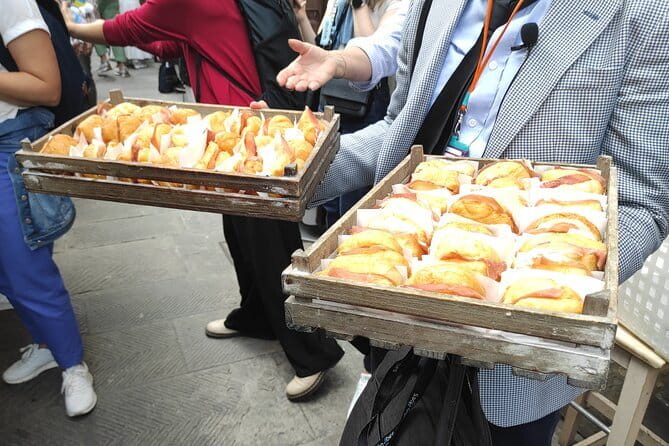
Here the menu may include ribollita, panzanella, pappa al pomodoro, and lampredotto. These dishes show several sides of Florence. Ribollita is a hearty bread and vegetable soup. Panzanella turns bread into a salad with fresh ingredients. Pappa al pomodoro makes a thick, comforting dish from bread and tomato. Lampredotto, made from beef stomach, is one of the city’s more distinctive specialties.
You may not receive every dish on every departure, so keep your expectations flexible. The exact selection can vary, and one of the most useful parts of the stop is learning what each dish means in local food culture.
This is also the stop that tests your sense of adventure. Lampredotto is not for everyone, and you should not feel obliged to eat something you dislike. At the same time, this is a chance to try an ingredient you might never order on your own. The food is paired with more local wine and bread, continuing the substantial meal.
Several guides, including Mara and Chiara, are praised for adding Florence stories and practical food advice as they walk. That matters here. A bowl of ribollita means more when you understand why bread appears so often in Tuscan cooking and how older households avoided waste.
The Duomo walk and Florence’s wine windows
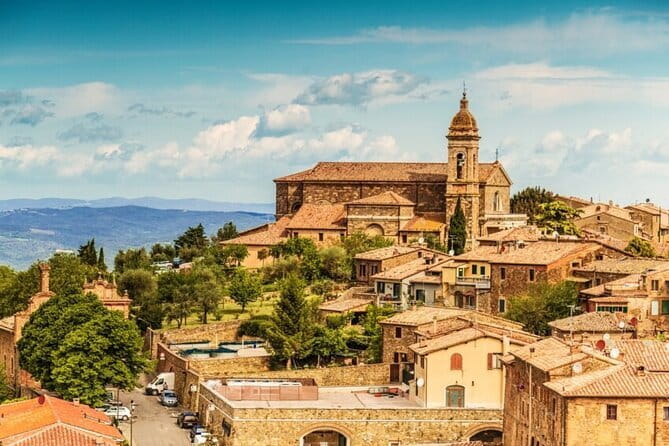
After the savory courses, the route passes the Cathedral of Santa Maria del Fiore. The Duomo is one of Florence’s essential sights, but you stop only long enough to appreciate it from the route. If you want to climb the dome or tour the cathedral interior, plan that separately.
The next wine stop takes place at an enoteca, described as a showcase for regional products. You can expect wine, olive oil, pastries, and other Tuscan specialties in a setting that feels part shop and part food museum.
This is a valuable pause because it broadens the lesson beyond the food on your plate. You can see how Tuscan products are presented and learn more about the wines you are drinking. The included tastings total five glasses: generally four regional wines, including Chianti or similar local varieties, plus a final glass of Vin Santo. The precise wines may change.
The route also passes small wine windows, old openings where wine was served directly from local establishments. These are easy to miss if you rush through Florence. Your guide explains their place in the city’s past, giving you one of those small details that can change how you look at a street corner later.
One practical point: this is a wine tour as well as a food tour, but not every person in the group may drink alcohol. A nonalcoholic wine option has been arranged for at least one guest, so tell the guide in advance if you need an alternative. Participants must be at least 18 years old.
More Florence wine afternoons:
- Tuscany Day Trip from Florence: Siena, San Gimignano, Pisa and Lunch at a Winery
★ 5.0 · 21,634 reviews - Florence: Pasta Cooking Class with Unlimited Wine
★ 4.9 · 10,285 reviews - Florence: Chianti Wineries Tour with Wine Tasting
★ 4.5 · 8,301 reviews - Small-Group Wine Tasting Experience in the Tuscan Countryside
★ 5.0 · 7,392 reviews
Gelato, the sweet break every Florence walk needs
The gelato stop comes after the wine shop and the Duomo passage. It is a welcome change of pace after cured meat, cheese, bread, and soup.
You receive freshly made gelato from a well-regarded local gelateria. Pistachio has been a particular favorite, but you can choose your flavor from what is available. The guide can also explain the difference between ordinary frozen dessert and properly made gelato, though the main job here is simply to enjoy it.
I like the placement of this stop. The cold, sweet course resets your palate, and it keeps the tour from feeling like one long succession of heavy foods. It also makes the walk feel like an evening in Florence rather than a formal tasting session.
There is a small limitation. Gelato is a treat, not a lesson in regional wine or cooking, so people looking only for savory specialties may find this stop less important. For most people, though, it is one of the easiest parts to enjoy.
Cantucci and Vin Santo at the finish
Near Museo Casa Martelli, the route reaches its final food stop. You taste Tuscan almond cookies, known as cantucci, with sweet Vin Santo.
This pairing is a classic Tuscan finish. The dry, crunchy cookie is made for dipping into the sweet wine, and the combination gives the tour a clear ending rather than leaving you with a last random snack.
It is also the moment when the food traditions connect most clearly with a social ritual. Wine is not only something you sample from a glass. It belongs to a pattern of eating, talking, lingering, and sharing a small sweet at the close of a meal.
The stop is short, around ten minutes, but that is enough for the tasting. If you want to buy more cookies or wine afterward, ask your guide where to shop. The guide’s local suggestions are one of the practical benefits of taking this tour early in your stay.
Piazza Strozzi and the value of the 4:30 start
The tour ends in Piazza Strozzi, in front of Cappelle Medicee. You are still close to the center, so you can continue on foot to dinner, a bar, or another evening sight.
The guide can suggest places to eat and drink for the rest of your visit. This is more useful than a generic list because you can explain what you liked during the tour. If you enjoyed panzanella but want to avoid another meat-heavy meal, say so. If the wine window or enoteca caught your interest, ask for similar places.
Starting at 4:30 p.m. also gives you a good first-evening plan. You learn the street layout while daylight remains, eat enough to count as dinner, and finish at a time when Florence is still easy to explore. I would not schedule a major timed attraction immediately afterward, since the tour can run about two and a half hours and food stops work best when you are not watching the clock.
Is $92.54 a fair price?
At $92.54 per person, this is not a cheap snack walk. The price makes more sense when you count the five food stops, five wine servings, the guide, and the time saved finding suitable local places on your own.
The tastings are intended to equal a full meal. You receive a deli platter, cooked Tuscan foods, wine, gelato, cantucci, and Vin Santo. You will likely spend extra only if you want additional drinks or decide to return to one of the shops later.
Value depends on what you want from Florence. If you are comfortable researching restaurants and ordering unfamiliar foods yourself, you can eat more cheaply. But you may spend several meals sorting through tourist menus, and you may miss dishes such as lampredotto or the city’s wine windows.
The private option costs more than joining a group, but it makes sense for families or friends who want more control over the pace and conversation. The standard group has a maximum of 12 people, which is small enough for questions without the cost of a fully private guide. Group discounts may also be available.
Who should book this experience?
I would book this for a first or second day in Florence. The route helps you understand local food, points out places you may want to revisit, and gives you a useful city-center orientation. Several guides, including Mara, Chiara, Vincenzo, Claire, and Ezgi, have been praised for warmth, humor, Florence stories, and practical recommendations.
It is especially suited to people who enjoy trying traditional dishes rather than only familiar Italian favorites. You should be open to cured meat, strong cheese, bread-based dishes, and lampredotto. The meal has variety in format, but not a huge range of ingredients.
Vegetarians, lactose-free diners, and gluten-free non-celiac diners may be able to join, but the tour is not presented as a fully customized dietary experience. Ask about substitutions before booking if your diet is strict.
This tour is also a good fit if you want a social outing. You walk with a small group, share tables or tastings, and have a guide to answer questions. It is not ideal if you want a quiet private meal, a detailed art tour, or a long sit-down dinner at one restaurant.
Should you book the Florence food and wine tour?
Book it if you want an approachable introduction to Tuscan food, especially if you are visiting Florence for the first time. The strongest parts are the local deli, the cucina povera tasting, the gelato, and the cantucci with Vin Santo. The route also gives you small pieces of Florence that are easy to miss, from wine windows to family-run food shops.
Skip it if you dislike meat and bread, cannot drink wine without a carefully arranged substitute, or prefer to spend two and a half hours inside one restaurant. For most food-focused visitors, though, the combination of a full meal, five tastings, central sights, and useful dining advice makes the $92.54 price reasonable. Arrive hungry, wear good shoes, and take notes when your guide recommends where to eat next.
FAQ
How long does the Florence food and wine tour last?
The experience lasts approximately 2 hours and 30 minutes.
Where does the tour start?
The meeting point is Piazza della Repubblica, 50123 Florence, Italy.
What time does the tour begin?
The scheduled start time is 4:30 p.m.
Where does the tour finish?
The tour ends at Piazza Strozzi, Piazza degli Strozzi, in front of Cappelle Medicee.
How much walking is involved?
The route covers approximately 1.6 kilometers, or about one mile, through central Florence.
How many people can join the group?
The maximum group size is 12 people. A private experience is also available.
What food is included?
You can expect Tuscan salumi, pecorino cheese, bread with extra virgin olive oil, sun-dried tomatoes, cucina povera dishes such as ribollita, panzanella, pappa al pomodoro, and lampredotto, fresh gelato, and almond cookies called cantucci.
How many wine tastings are included?
Five wine servings are included in total. These include regional wines such as Chianti and a final glass of sweet Vin Santo with cantucci.
Is there a minimum age?
Yes. Participants must be at least 18 years old because the experience includes several wine tastings.
Can people with dietary restrictions join?
The tour can suit vegetarian, lactose-free, and gluten-free, non-celiac participants, but options may be limited at the individual food stops. Tell the provider about your needs before joining.
Is hotel pickup included?
No. Hotel pickup and drop-off are not included. You must reach Piazza della Repubblica on your own.
Can I cancel for a full refund?
Yes, if you cancel at least 24 hours before the experience start time. Cancellations or changes made less than 24 hours before the start are not refunded.
Latest additions around Florence
- Palatina Gallery and Pitti Guided Tour in Florence★ 5.0 · 3 reviews
- Florence: Cathedral Tour & Brunelleschi’s Dome Climb Ticket★ 5.0 · 3 reviews
- Florence Uffizi Gallery Skip-the-line Tour w Art Historian Guide★ 5.0 · 3 reviews
- Private Tour: Pisa and Lucca from Florence★ 5.0 · 3 reviews
- San Gimignano Bike Tour (SOFT)★ 4.5 · 3 reviews
- Florence: Tour of Florence by rickshaw★ 5.0 · 3 reviews
- Center of Florence by golf cart★ 5.0 · 3 reviews
- From Firenze | Chianti day tour in a classic car★ 5.0 · 3 reviews
Wine Tours, compared.
Tuscany Day Trip from Florence: Siena, San Gimignano, Pisa and Lunch at a Winery
Read our review →
Small-Group Wine Tasting Experience in the Tuscan Countryside
Read our review →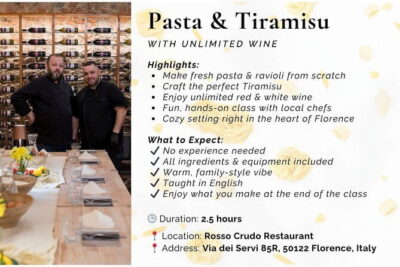
Pasta & Tiramisu Cooking Class with Unlimited Wine
Read our review →
Pisa, Siena and San Gimignano Day Trip with Lunch & Wine Pairing
Read our review →
SMALL-GROUP Wine Safaris: Tuscan Wine Tasting Tours from Florence
Read our review →Browse the lists this tour appears in