
Reviewed · FLORENCE DUOMO TOURS
Duomo Museum & Baptistry: Cathedral Complex & Bell Tower
The best part of this Florence tour is the chance to connect the city’s great names, Brunelleschi, Michelangelo, Donatello, and Ghiberti, in one compact visit. You begin at the Opera del Duomo Museum, then see the Baptistery before tackling the climb that brings you close to Brunelleschi’s dome and high above Florence.
I like the small-group format, which can make a major difference in crowded Florence. I also like the mix of art and architecture: Ghiberti’s bronze doors and Michelangelo’s sculpture are just as important here as the famous rooftop views. The main catch is simple but important: the main Cathedral interior is not part of the guided tour, and meeting instructions need close attention.
In This Review
- Key points to know before booking
- Why this Duomo visit is more than a photo stop
- Starting at the Opera del Duomo Museum
- Michelangelo’s Pietà Bandini and Donatello’s Penitent Magdalene
- Piazza del Duomo and the three-part cathedral complex
- Inside the Baptistery beneath the golden ceiling
- The climb, the stairs, and the payoff at the top
- Guide quality and group size
- Timing, access, and the 72-hour window
- Is $76.88 a fair price?
- Who should book this Florence cathedral tour?
- Should you book it?
- FAQ
- How long does the Duomo Museum and Baptistery tour last?
- What language is the tour offered in?
- What is included in the price?
- Is the main Cathedral interior included?
- Is the Crypt of Santa Reparata included?
- Is Giotto’s Bell Tower included?
- Is the dome climb guided?
- Where does the tour begin?
- Where does the tour end?
- Can I cancel for a full refund?
Key points to know before booking
- Ghiberti’s Gates of Paradise: See the original bronze doors inside the museum, protected from weather and pollution.
- Michelangelo and Donatello: The collection includes Michelangelo’s Pietà Bandini and Donatello’s wooden Penitent Magdalene.
- Golden Baptistery mosaics: The Baptistery interior is covered with more than 1,000 square meters of 13th-century mosaics.
- Dome or tower access: The experience includes self-guided complex access, with the Giotto Bell Tower climb included if that option is selected. The tour description and guest experiences also emphasize a guided dome climb, so confirm exactly which climb your booking includes.
- A focused visit: The guided portion lasts about 1.5 hours, while the full experience runs roughly 2 hours and 15 minutes.
- Plan for stairs: You need a moderate level of fitness for the climb, and comfortable shoes are essential.
Why this Duomo visit is more than a photo stop
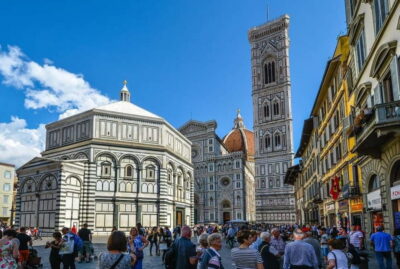
Florence’s cathedral complex can look like one grand building from the outside, but it is really a group of separate monuments. The Cathedral of Santa Maria del Fiore, Giotto’s Bell Tower, the Baptistery of San Giovanni, the Crypt of Santa Reparata, and the Opera del Duomo Museum each tell a different part of the story.
That distinction matters here. This experience focuses on the museum and Baptistery, then adds self-guided access to other parts of the complex. It does not provide a guided visit inside the main Cathedral, and the Cathedral itself is free to enter but may require waiting in line.
I like this arrangement for a first visit because the guide gives you the artistic context before you explore on your own. You are not simply pointed toward a famous façade, then left to guess what you are seeing. You learn why Florence invested so heavily in this religious center and how the city’s medieval faith, civic pride, and Renaissance ambition all meet here.
The tour costs $76.88 per person. That is not a cheap ticket for a little over two hours, but the price includes the guided museum and Baptistery visits, an English-speaking local guide, headsets, entry fees, and access to self-guided sites for 72 hours. The value is strongest if you want explanation and help making sense of the art. If you prefer to wander silently and read labels at your own pace, buying individual access and exploring alone may suit you better.
More Duomo climbs and cathedral visits:
- Florence: Duomo Cathedral Guided Tour
★ 3.9 · 5,970 reviews - Florence: Brunelleschi’s Dome Climb Entry Ticket & Duomo
★ 4.5 · 3,815 reviews - Florence: Duomo Guided Tour with Optional Dome Climb Upgrade
★ 4.1 · 3,706 reviews
Starting at the Opera del Duomo Museum
The meeting point is the Museo dell’Opera del Duomo at Piazza del Duomo 9, just behind the Cathedral. Arrive early. Florence’s cathedral square is crowded, and the meeting instructions have caused confusion when different versions of the location were given.
The practical advice is to confirm the exact meeting spot before you leave your hotel and look for the guide’s identifying sign at eye level. One person had trouble finding a flag held low in a dense crowd, then was treated as late despite arriving early. That is an avoidable way to begin an expensive tour.
Once inside, the museum gives you breathing room from the crowds outside. It was created to house original works made for Florence’s cathedral complex, including pieces removed from the buildings to protect them. The collection is not a side attraction. It is one of the major sculpture collections in Florence.
The museum’s grandest room is the Sala del Paradiso. It contains a life-size reconstruction of the Cathedral’s original 14th-century façade, decorated with 40 statues by artists including Donatello. This setup helps you picture how the front of the Cathedral once looked before later changes and removals.
Directly across from the reconstructed façade are Lorenzo Ghiberti’s original Gates of Paradise. These golden bronze panels are among the most famous works connected with Florence. They now rest indoors, away from the rain and air pollution that would slowly damage their surface.
A guide can make the difference here. Without context, you might admire the doors as beautiful metalwork and move on. With explanation, you begin to see their place in the competition, money, technical skill, and religious purpose that shaped Renaissance Florence.
Michelangelo’s Pietà Bandini and Donatello’s Penitent Magdalene
Two sculptures give the museum a more personal edge. Michelangelo’s Pietà Bandini was intended for his own tomb. It is not a polished public commission made to impress a crowd. Its unfinished quality and emotional weight make it feel like a private work, even in a large museum.
Donatello’s Penitent Magdalene offers a very different experience. The wooden figure is deliberately haunting and startlingly realistic. It does not present an idealized saint. Instead, it shows an aged, worn body and a face marked by hardship.
These works are worth slowing down for. The museum has famous objects, but the strongest visit is not about ticking off names. You should give yourself time to look at the hands, faces, posture, and unfinished surfaces. Those details reveal how differently Michelangelo and Donatello approached the human figure.
The museum also includes a gallery about Brunelleschi’s dome, with original 15th-century tools and wooden models. This is useful preparation for the climb. You see that the dome was not simply a large roof placed on top of the Cathedral. It was a demanding engineering project that required new methods, careful planning, and great confidence.
The visit ends with the Brunelleschi Terrace, where you get a close view of the dome and a strong photo position. This is different from the top-of-the-dome panorama. Here, you are close enough to appreciate the structure’s surface and scale.
Piazza del Duomo and the three-part cathedral complex
The short stop in Piazza del Duomo helps put the buildings together. The square is Florence’s spiritual and historic center, and its three main monuments were designed to work as a group.
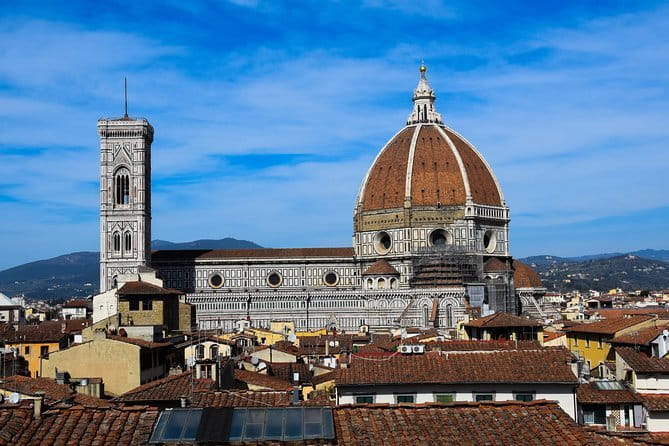
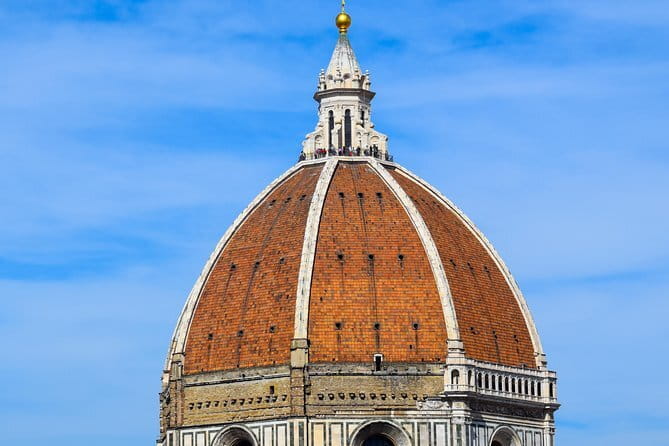
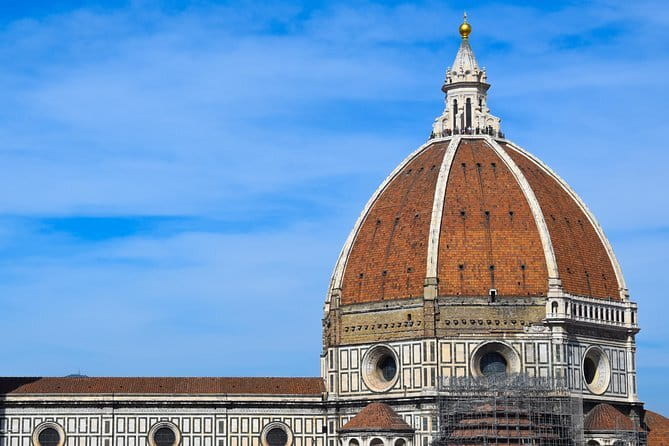
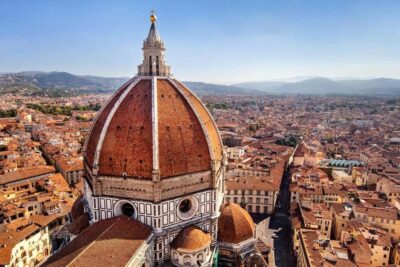
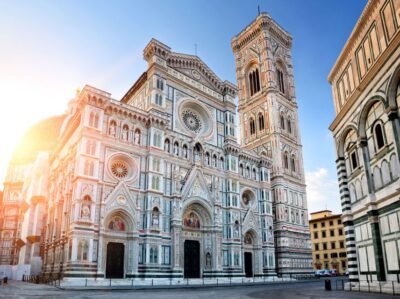
The Cathedral is covered in white, green, and pink marble patterns. Brunelleschi’s red-tiled dome dominates the view, while Giotto’s Bell Tower rises beside it with its own carefully detailed marble exterior. In front of the Cathedral, the octagonal Baptistery adds another shape and another period of Florentine architecture.
You will want a few minutes to look outward before going inside. From the square, compare the different surfaces, colors, and proportions. It is easy to focus only on the dome, but the whole complex was designed to impress from several angles.
The guide’s explanation is especially useful for visitors who confuse the three buildings. The museum is a separate building. The Baptistery is another. The main Cathedral is a third. The dome is part of the Cathedral, not a separate church.
That sounds obvious once explained, but unclear meeting instructions and rushed visits have led some people to expect a different route. Read the booking details carefully so you know which monuments are guided, which are self-guided, and which are not included.
More museums worth an hour:
- Florence: Skip-The-Line Uffizi Gallery Timed Entry Ticket
★ 4.5 · 27,832 reviews - Florence: Leonardo Interactive Museum Entry Ticket
★ 4.5 · 11,763 reviews - Florence Accademia Gallery Tour with Entrance Ticket Included
★ 4.5 · 6,148 reviews - Uffizi Gallery Small Group Tour with Guide
★ 4.5 · 4,923 reviews
Inside the Baptistery beneath the golden ceiling
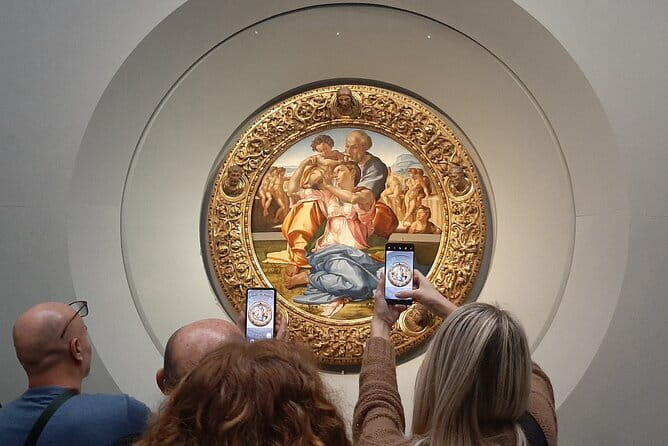
The Baptistery of San Giovanni is one of Florence’s oldest religious buildings. Its octagonal form and white-and-green marble exterior helped shape the look of later Florentine architecture.
Inside, the ceiling is the main event. More than 1,000 square meters of 13th-century golden mosaics cover the interior, including scenes of the Last Judgment and other biblical stories. The gold catches the light and gives the room a very different mood from the bright marble exterior.
You should look up slowly. The ceiling is large and crowded with figures, symbols, and scenes. Without an explanation, it can be hard to know where to begin. A guide can point out the major sections and explain how the images would have taught biblical stories to people who could not read.
The Baptistery also has a strong connection to Florence’s civic identity. This is where famous Florentines, including Dante Alighieri, were baptized. The building was not only a place of worship. It was part of the city’s public life and collective memory.
One limitation is that the Baptistery may not be the highlight for every visitor. If you are more interested in engineering, sculpture, or panoramic views than religious art, the 30-minute stop may feel slower than the climb. The tour works best when you approach the Baptistery as a major artwork in its own right, not merely as a waiting room for the dome.
The climb, the stairs, and the payoff at the top
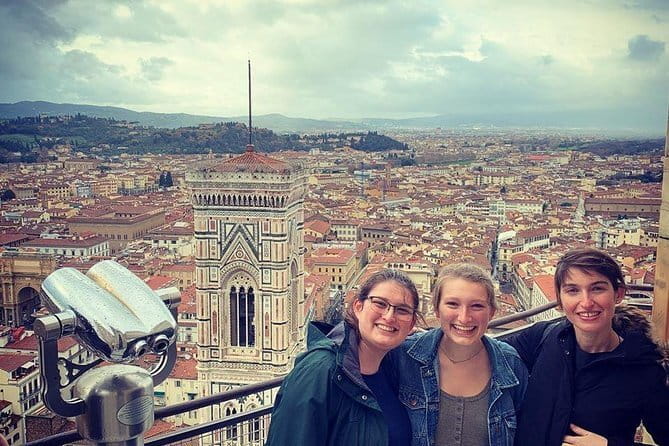
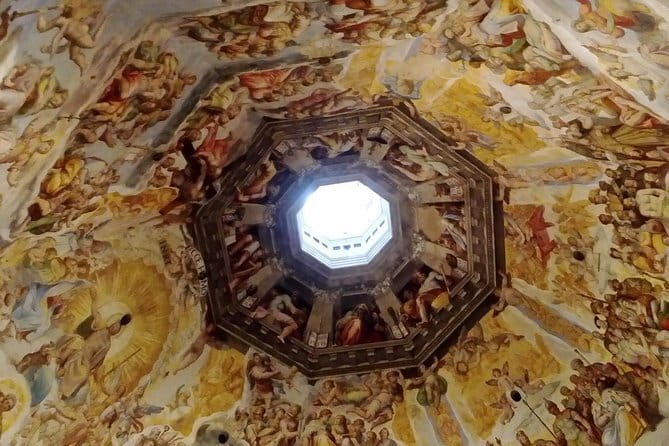
The climb is the part many people remember most. As you go upward, the architecture becomes close and physical. You are not looking at Brunelleschi’s dome from the square. You are moving through the structure and seeing the artwork and construction from unusual angles.
The climb requires a moderate level of fitness. The route is not a casual lift ride, and you should wear sturdy walking shoes. One useful tip from an experienced participant was to avoid attempting it while hungover and to skip wide-legged trousers, which can be awkward on tight stairs.
The views from above are the obvious reward. You see Florence from a height that makes the city’s terracotta roofs, church towers, and surrounding hills easier to understand. The view is worth the effort, but the close-up look at the dome’s interior and structure is just as valuable.
There is some confusion in the supplied tour information about the exact climb. The highlights and several experiences describe a guided climb of Brunelleschi’s dome. The included details list a self-guided ticket for Giotto’s Bell Tower if that option is selected. These are different climbs in the same complex.
Do not assume that a general cathedral-complex ticket includes the climb you want. Confirm whether your selected option is for the dome or the bell tower, and check whether the climb itself is guided or self-guided. This is the single most important point to settle before paying.
If you cannot climb, one particularly considerate arrangement allowed a companion to continue while a company representative helped the other person enter the church. That kind of assistance is not guaranteed as a standard feature, but it shows why it is worth explaining your needs before the tour begins.
Guide quality and group size
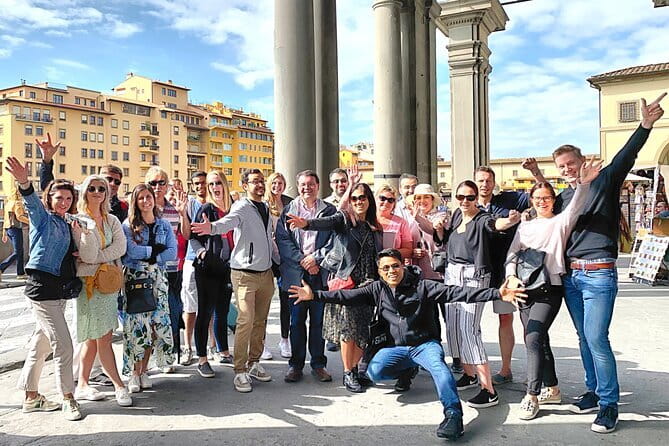
The experience is offered in English and uses headsets, which are helpful when the square is noisy or the group spreads through a gallery. The advertised group size is small, with 12 people described as the usual target, although the maximum is listed as 19.
That is still much better than being part of a large crowd with a guide speaking into the air. A small group gives you more room to ask questions and makes it easier to stay together around major works.
Guide quality can shape this tour. Silvia and Francesco received especially warm praise for their energy, clear explanations, and command of Renaissance art. One guide was completing a master’s degree in Renaissance Art, and her enthusiasm made the subject easier to follow.
The experience is not uniformly strong. Some participants found a guide rushed the museum portion or offered less historical detail than expected. One person left early after being told that five minutes inside would be enough unless they returned after the tour.
My advice is to speak up if you need more time at a sculpture or want an explanation repeated. The tour is short, and a guide trying to keep the schedule may move faster than you prefer. The strongest guides make the art feel alive, but you should not expect a private museum visit at this price.
Timing, access, and the 72-hour window
The guided portion lasts about 1.5 hours, while the full experience is listed at approximately 2 hours and 15 minutes. The self-guided tickets for included locations remain valid for 72 hours, giving you some flexibility.
That 72-hour window is useful because the cathedral complex contains more than you can comfortably absorb in one rushed outing. You can return to self-guided locations later, depending on the exact access attached to your booking. The Crypt of Santa Reparata is included as a self-guided visit, while guided service for the crypt and bell tower is not included.
The Cathedral interior is free, but entry requires a line. Since it is not part of the guided route, you need to set aside extra time if you want to go inside. Do not assume the tour will carry you through the main church.
The tour is near public transportation, and no hotel pickup is provided. The starting and ending points are both in the Duomo area, with the listed end point at Giotto’s Bell Tower. Florence’s center is easy to reach on foot, but allow extra time for crowds and for finding the correct side of the square.
Free cancellation is available until 24 hours before the start time. Poor weather or failure to meet the minimum group size can lead to a rescheduled experience or a full refund.
Is $76.88 a fair price?
At $76.88, you are paying for more than admission. The cost includes a local English-speaking guide, headsets, the museum and Baptistery entries, taxes, and self-guided access to listed complex sites.
I consider it fair if you value an organized explanation and want the major works introduced in a logical order. It is especially useful if Florence is your first stop in Italy and you are still learning how the Renaissance developed.
The value drops if your main goal is only the Cathedral interior. That is not included in the guided route, and the free church entrance may involve a separate wait. The value also suffers if your booking does not include the exact climb you expect.
Before booking, check three things:
- The selected climb, dome or Giotto’s Bell Tower
- Which sites are guided and which are self-guided
- The exact meeting point at the museum
Those checks prevent the most serious disappointments.
Who should book this Florence cathedral tour?
I would choose this experience if you want a structured introduction to Florence’s cathedral complex, prefer a small group, and care about the stories behind the art. It suits anyone who wants to see Ghiberti, Michelangelo, Donatello, and Brunelleschi in one visit.
It is also a good match for active visitors who want a climb and can handle stairs. Wear tennis shoes or other secure footwear, and plan the climb for a cooler part of the day if possible.
I would be more cautious if you want long, quiet time in the museum or expect a guided tour of the main Cathedral interior. The museum and Baptistery are the core of the guided visit, and the Cathedral church itself is bypassed unless you arrange separate entry.
Should you book it?
Book this tour if expert interpretation, a small group, and access to major cathedral-complex sites matter more to you than having a completely flexible schedule. The museum’s reconstructed façade, Ghiberti’s original doors, Michelangelo’s Pietà Bandini, and the Baptistery mosaics give you plenty to see before the climb.
Skip it if you mainly want to enter the Cathedral for free, avoid stairs, or explore at your own pace. Most importantly, confirm the climb option and meeting point before booking. With those details clear, this can be a strong way to understand Florence’s artistic center instead of simply photographing it from the square.
FAQ
How long does the Duomo Museum and Baptistery tour last?
The experience lasts approximately 2 hours and 15 minutes. The guided portion of the Opera del Duomo Museum and Baptistery takes about 1.5 hours.
What language is the tour offered in?
The guided tour is offered in English.
What is included in the price?
The price includes the guided museum and Baptistery tour, an English-speaking local guide, headsets, entry fees and taxes for included sites, and self-guided tickets for listed locations.
Is the main Cathedral interior included?
No. The main Cathedral interior is not part of the guided tour. Entry is free but may require waiting in line.
Is the Crypt of Santa Reparata included?
Yes. A self-guided entrance ticket to the Crypt of Santa Reparata is included.
Is Giotto’s Bell Tower included?
A self-guided ticket for the Giotto Bell Tower climb is included if that option is selected. Confirm your chosen option when booking because the dome and bell tower are separate climbs.
Is the dome climb guided?
The tour information describes a guided dome climb, while the included details also refer to self-guided tower access. Confirm whether your booking includes a guided dome climb or a self-guided bell tower ticket.
Where does the tour begin?
The listed meeting point is the Museo dell’Opera del Duomo at Piazza del Duomo 9, Florence.
Where does the tour end?
The listed end point is Giotto’s Bell Tower in Piazza del Duomo.
Can I cancel for a full refund?
Yes, if you cancel at least 24 hours before the experience starts. Cancellations or changes made less than 24 hours before the start time are not refundable.
Latest additions around Florence
- Florence: Cathedral Tour & Brunelleschi’s Dome Climb Ticket★ 5.0 · 3 reviews
- Palatina Gallery and Pitti Guided Tour in Florence★ 5.0 · 3 reviews
- Florence Uffizi Gallery Skip-the-line Tour w Art Historian Guide★ 5.0 · 3 reviews
- Private Tour: Pisa and Lucca from Florence★ 5.0 · 3 reviews
- San Gimignano Bike Tour (SOFT)★ 4.5 · 3 reviews
- Florence: Tour of Florence by rickshaw★ 5.0 · 3 reviews
- Center of Florence by golf cart★ 5.0 · 3 reviews
- From Firenze | Chianti day tour in a classic car★ 5.0 · 3 reviews
Florence Duomo Tours, compared.
Brunelleschi’s Dome Climb Entry Ticket & Duomo
Read our review →
Duomo Guided Tour with Optional Dome Climb Upgrade
Read our review →
Skip-the-Line Duomo, Baptistery, Giotto Bell Tower
Read our review →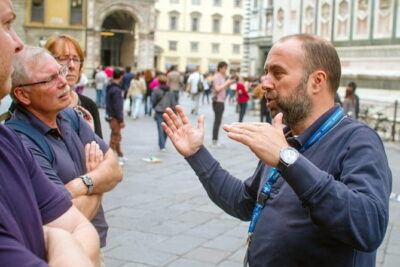
Best of Florence: Small Group Tour Skip-the-Line David & Accademia with Duomo
Read our review →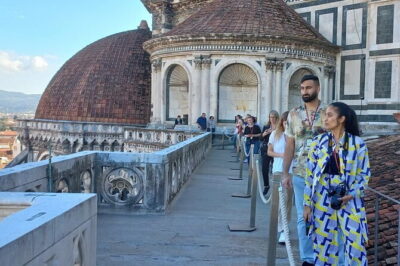
Florence Skip-the-Line Duomo Tour with Guide & Brunelleschi Dome
Read our review →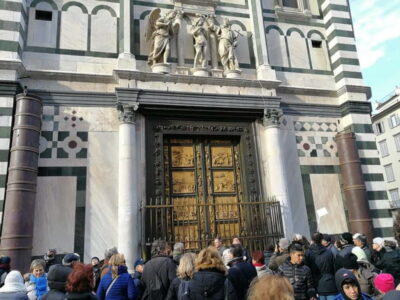
Duomo Area Tour and Brunelleschi Dome Climb Ticket
Read our review →Browse the lists this tour appears in